
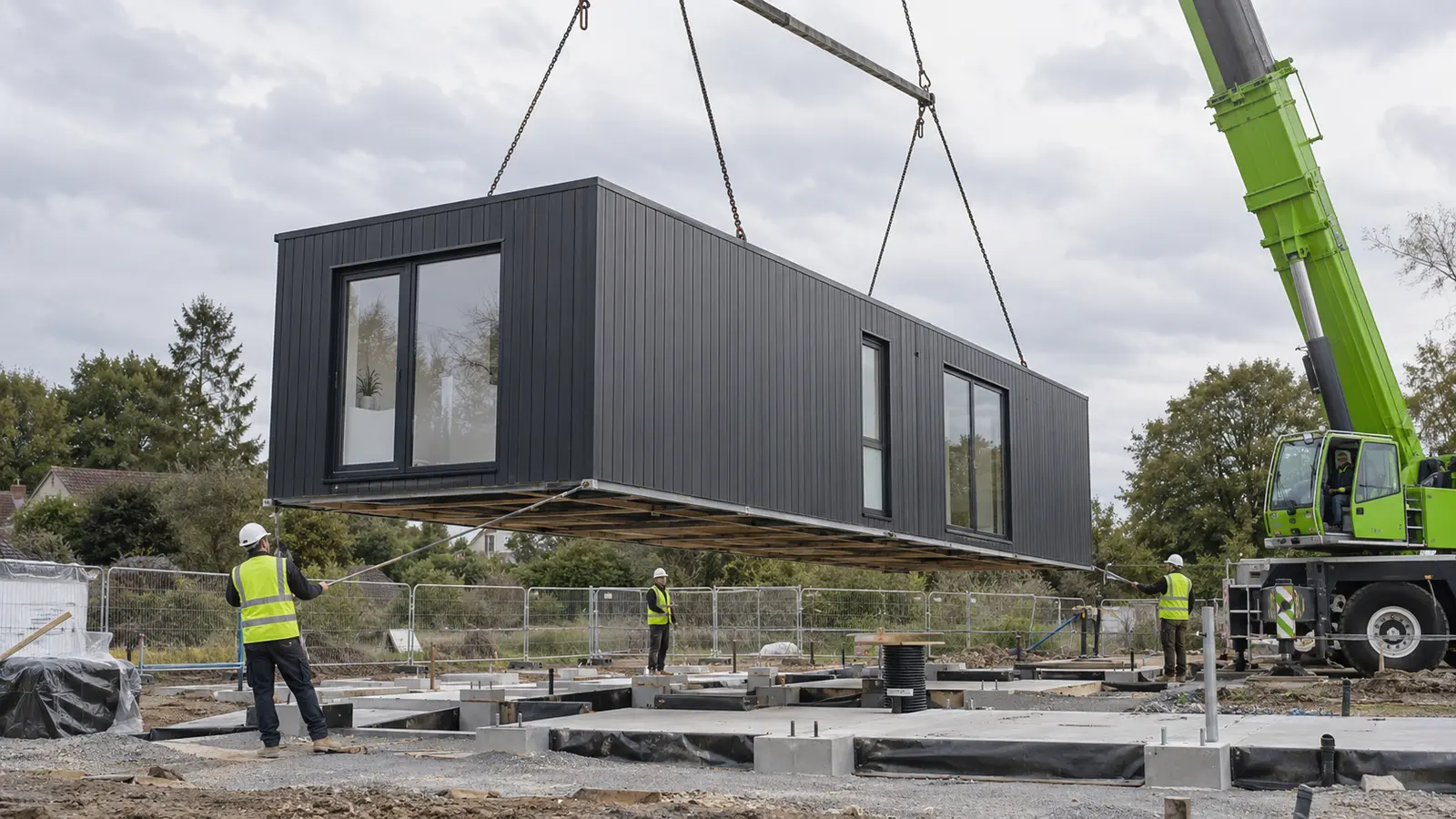
Modular construction is a way of producing a building in sections away from its final location. The sections are manufactured in a factory, transported to site and installed onto prepared foundations.
That sounds simple, but the finished building is only one part of the job. Design, planning, groundworks, utilities, access, transport and lifting all need to come together at the right time.
This guide explains the basics without the sales pitch.
How does modular construction work?
The process normally begins with a brief. This sets out what the building needs to do, how much space is required, where it will be located and when it needs to be operational.
The design is then developed around the chosen modular system, site conditions and relevant requirements. At the same time, the project team plans foundations, drainage, utilities, access and installation.
The modules are manufactured off site and fitted out to the agreed stage. Once the site is ready, they are transported, lifted into position and connected. Finishing work, testing and handover follow.
The exact process varies. A classroom block, site office and permanent healthcare building will not have the same specification or approval route.
What are the main advantages?
Programme
Factory manufacture and site preparation can happen at the same time. This may reduce the overall programme when the project is planned properly.
Less disruption
Completing more work away from the final site can reduce the duration of noisy or disruptive construction activity on site.
Quality control
Factory conditions allow work to be inspected throughout manufacture, with less exposure to changing weather.
Greater certainty
Early decisions about design, specification and interfaces can provide a clearer view of cost and programme.
Flexibility
Some modular buildings can be extended, reconfigured or relocated. This depends on the original design and should not be assumed.
Is modular construction always faster?
No. It can be faster, but only if decisions, approvals and site work keep pace with manufacture.
Delays can still arise from planning, design changes, utilities, ground conditions, supplier capacity, transport restrictions or access. A realistic programme needs to include the whole project, not only the factory build.
Is modular construction cheaper?
Not automatically.
The right comparison should include the building, foundations, transport, craneage, services, finishes, professional fees and any work needed after installation. It should also consider the value of a shorter programme or reduced disruption where those matter to the client.
A cheap building price can become expensive if important items are missing from the scope.
Does modular mean temporary?
No. Modular buildings can be temporary, relocatable or permanent.
The intended use, design life, specification, planning position and future plans should be established at the start. A permanent building can use modular construction just as a traditional building can.
What should be checked before choosing modular?
Important early questions include:
- Is there enough access for transport and lifting?
- What foundations and groundworks are needed?
- Where will utilities connect?
- What approvals are required?
- Does the design suit a modular grid?
- What is included in the supplier's price?
- Who is responsible for each site interface?
- Is the proposed programme realistic?
- How will the building be maintained or changed later?
When should you speak to a modular specialist?
Ideally, before the brief and budget become fixed.
Early advice can help establish whether modular suits the site and intended use. It can also reveal costs, access issues or responsibilities that might otherwise appear later.
Final thought
Modular construction is not a shortcut around proper planning. It works best when the brief is clear, decisions are made at the right time and every part of the project is coordinated.
If you are considering a modular building in Kent or the South East, speak to Ryan about the site, intended use and timescale. You will receive a straightforward view of whether modular is worth exploring.
Considering a modular building?
Tell Ryan what you are planning and he will help you identify the next questions to answer.