
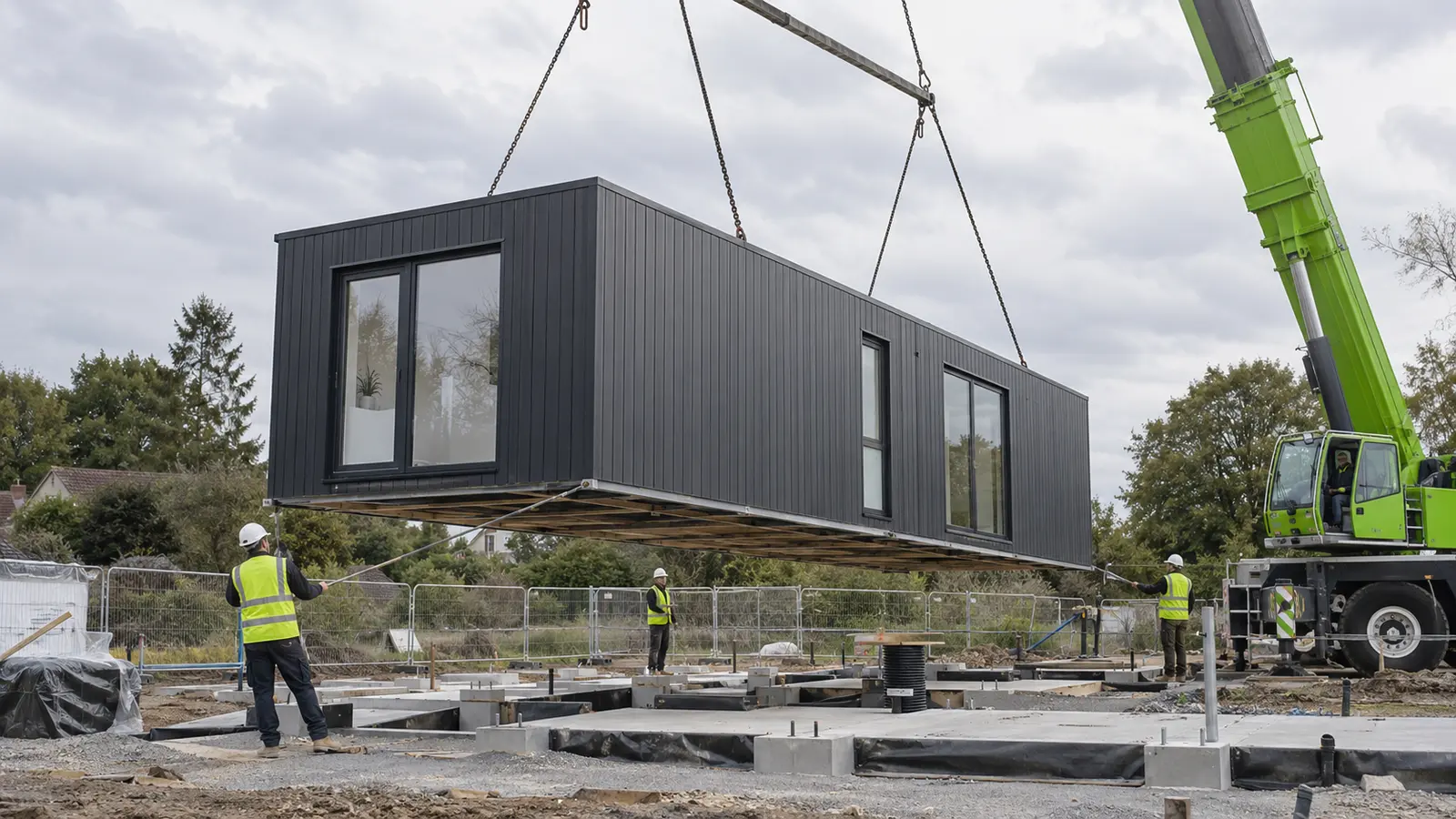
Modular construction moves a significant part of the building process away from the final site. Depending on the system, complete sections or structural panels are manufactured in controlled conditions, transported to site and installed onto prepared foundations.
That can make the site programme much more efficient, but the building is only one part of the job. Design, planning, Building Regulations, foundations, drainage, utilities, access, transport, installation and final connections still need to be coordinated properly.
This guide explains the process without the sales pitch.
What types of modular construction are available?
Steel frame
Steel-framed modular systems can provide strong, durable structures for a wide range of permanent and relocatable buildings, including education, commercial and specialist applications.
Timber frame
Timber-framed modular buildings can provide a flexible and highly insulated solution for residential, education and commercial uses, depending on the design and specification.
SIPs
Structural Insulated Panels combine structural boards with an insulated core, creating a lightweight and highly insulated building envelope that can suit extensions, homes, offices and other permanent spaces.
The right system depends on the intended use, size, thermal requirements, design, budget, programme and site. MITCORP is not tied to one method and can help develop the most appropriate route.
How does a modular project work?
The process normally starts with a brief. This sets out what the space needs to do, how large it needs to be, where it will go and when it needs to be operational.
The design is then developed around the chosen construction system and the site conditions. Planning and Building Regulations requirements are considered, foundations and services are designed, and the full scope is agreed before manufacture.
While the building is being manufactured off site, foundations, drainage, utilities and other enabling works can progress at the final location. When both are ready, the building is delivered, installed and connected before finishing work, testing and handover.
How fast is installation?
For smaller suitable projects, the on-site installation itself can start from as little as three days. That does not mean the complete project takes three days. Design, approvals, manufacturing, foundation works and services all sit before the final installation stage.
The real advantage is that manufacture and site preparation can often happen in parallel, reducing the amount of time the client has intensive construction activity at the property or site.
What are the main advantages?
Less disruption
Completing more of the work off site can reduce the duration of noisy or disruptive construction activity at the final location.
Programme control
Manufacture in controlled conditions can progress alongside site preparation and is less exposed to changing weather.
Quality control
Materials and workmanship can be checked during manufacture before the building reaches site.
Year-round use
Permanent modular buildings can be fully insulated and specified for comfortable use throughout the year.
Design choice
External finishes, glazing, layouts and internal specifications can be developed around the client and the setting.
What about foundations?
Traditional foundations are not the only option. Where the structure and ground conditions allow, screw-pile foundations can provide a fast, low-disruption alternative. They can reduce excavation, spoil removal and the volume of concrete used on site.
MITCORP expects screw piles to be suitable for the majority of its modular projects, potentially around 90%, but the final decision must be based on the structural design and actual ground conditions.
Can the project be fully turnkey?
Yes. A turnkey modular package can go beyond supply of the building itself. Depending on the agreed scope, MITCORP can coordinate the design, approvals, foundations, manufacture, delivery, installation, electrical work, plumbing, heating, drainage connections, internal finishes, testing and handover.
The important point is to define the scope clearly before the project starts so everyone understands what is included and what remains outside the package.
Is modular construction always faster?
No. It can be faster, but only when decisions, approvals and site work keep pace with manufacture. Delays can still arise from planning, design changes, utilities, ground conditions, supplier capacity, transport restrictions or access. A realistic programme needs to cover the whole project, not only the factory build.
Is modular construction cheaper?
Not automatically. The right comparison should include the building, foundations, transport, lifting, services, finishes, professional fees and work required after installation. It should also consider the value of a shorter on-site programme or reduced disruption where those matter to the client.
A cheap building price can become expensive if important items are missing from the scope.
Does modular mean temporary?
No. Modular buildings can be temporary, relocatable or permanent. A permanent modular building can be designed as a fully insulated home extension, classroom, office or other long-term space just as conventional construction can.
What should be checked before choosing modular?
- Is the intended use clear?
- Is there enough access for delivery and installation?
- Which construction system suits the brief?
- What foundations and ground conditions need to be allowed for?
- Where will utilities connect?
- What approvals are required?
- What does the quoted package include?
- Who is responsible for each interface?
- Is the proposed programme realistic?
- What level of insulation, finishes and services is required?
Final thought
Modular construction is not a shortcut around proper planning. It works best when the brief is clear, the right system is selected and every part of the project is coordinated before the building arrives.
If you are considering a modular extension, classroom, office or other building, speak to Ryan about the site, intended use and timescale. You will get a straightforward view of whether modular is worth exploring.
Considering a modular building?
Tell Ryan what you are planning and he will help you identify the next questions to answer.